Claude Bouchard on Suspense, Thrillers, & VIGILANTE

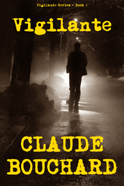
Vigilante, By Claude Bouchard

Vigilante, By Claude Bouchard

Silverberry: What is Vigilante about and what inspired the story?


Bouchard: Vigilante, as the title implies, deals with a serial killer who has taken on the task of ridding the city of violent criminals and the police investigation led by Lieutenant Dave McCall to apprehend this self-appointed executioner. Though the story bears no likeness to it whatsoever, the O.J. Simpson legal fiasco in the mid-90s is what set the wheels in motion to write about someone intent on dealing with offenders who had managed to slip through the inadequate net of the justice system.


Silverberry: What does your hero, Dave McCall, yearn for?


Bouchard: Dave McCall is the definition of the honest, by-the-book cop and with this mindset his is a mission to enforce the law according to procedure to ensure offenders face the consequences for their crimes. He doesn’t believe two wrongs make a right so, although the Vigilante’s targets consist of murderers, rapists and the like, McCall cannot morally condone the killer’s actions and must bring him to justice.


Silverberry: Did the book require research and if so, how did what you discover impact the story?


Bouchard: Since I initially wrote Vigilante, ahem, a few years ago, I don’t recall exactly how much research was required or via what platforms such research was done *wondering if I even had Internet then…* That said, I have always strived for accuracy and plausibility in my details so I know research was involved for geographical and other aspects. One reader called me a lazy author along the way because I mentioned a Montreal Expos win on a specific date when, following his quick Google search, they had actually lost that game. Fact is, I had obtained the game date and visiting team through schedule research but, since I wrote the book a year before the actual game took place, I couldn’t predict the outcome. Worry not; this element had no impact on the story barring a couple of my characters being happy fans.


Silverberry: With eight novels penned, what themes do you see emerging in your work?


Bouchard: The underlying theme in my books, particularly the seven of the Vigilante series, is the age old topic of good versus evil liberally seasoned with ‘an eye for an eye’ reasoning. Fiction is a medium through which readers, and writers for that matter, can live experiences which they likely wouldn’t in real life. This is what I do and offer to my readers with my writing.


Silverberry: What do you think makes for a good suspense thriller?


Bouchard: I’ve been asked this question before and was happy with my response so I will now cheat and present that answer: A good thriller has to move. Descriptions of characters, places and events should to be present only enough to make them seem real in the reader’s mind. Overdoing it slows the pace and simply becomes filler for increased word count. Elements throughout the story should support the final outcome such that the reader can think back and validate the outcome. Consider “The Sixth Sense” with Bruce Willis as an illustration to this point. One realizes nothing was at it seemed yet it all makes sense. This has much more appeal than briefly mentioning a minor character early in a story then making him the culprit and laying out the behind the scenes explanation at the end, none of which was presented to the reader along the way. Finally, a good thriller has an unexpected twist at the end.


Silverberry: What makes for a great series?


Bouchard: My novels. 🙂 Seriously, recurrent characters which grow with time and non-repetitious plots to keep each book unique. One must also include enough history in any given book to situate new readers all while avoiding too much rehashing for those familiar with previous novels.


Silverberry: How do you approach crafting you novels?


Bouchard: To date, all my novels started with my coming up with a general idea to get me going. The first thing I typed for each of my eight novels as well as my two current WIPs was the title, which always seemed to be an attachment to the general idea. From that point, it’s time to write and see where things go. In my case, the process involves no planning, mapping, charting or plotting. I occasionally have to sit back and wait a bit while my characters figure out what’s going on or what to do but they generally get things in order quickly enough. When they do, I’m there for the typing duties. Once my characters are done, the whole thing is reviewed, revised and rewritten as many times as necessary to make it a finished product.


Silverberry: What’s ahead for you?


Bouchard: More installments of the series, including my current WIP, Thirteen to None, an eventual stand-alone, The Last Party, and, hopefully, continued growth of my reader-base.


Silverberry: Thanks for stopping by, Claude!


Readers, grab a copy of Vigilante, and learn about Claude’s other books at the links below. And in July, look for a chance to win a copy of Vigilante in my Thriller and Suspense Giveaway Contest, right here on my website.


Follow Claude Bouchard on his Website


Purchase Vigilante on Amazon


Claude Bouchard was born in Montreal, Canada, where he still resides. His first stab at writing was in 1995, the result being his novel, Vigilante. More titles in the series followed: The Consultant (1996), Mind Games (1997), The Homeless Killer (2009), 6 Hours 42 Minutes (2011), Discreet Activities, and Femme Fatale (2013). Asylum is his first stand-alone novel (2012).


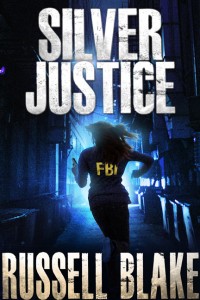
Russell Blake, Silver Justice, Suspense and Thrillers!

Silver Justice, By Russell Blake

Silver Justice, By Russell Blake

If you’re looking for a suspense thriller, a rip-roaring, edge-of-your-seat read from a talented, fresh voice who writes about compelling themes and complex characters, then look no further then bestselling author Russell Blake. As the following interview makes apparent, he can write with the best of them.


Silverberry: What are the elements of a great suspense thriller?


Blake: Characters you care about, a conclusion that matters to you by the time you’re a third of the way through, and a series of beats that continue escalating the tension and stakes as the story unfolds.


Silverberry: Silver Justice deals with the 2008 financial meltdown. What made you decide to take on this topic and what will readers find by reading the book?


Blake: I’m deeply distrustful of official explanations of anything, because we’ve seen that the government and media lie to us at every turn. The official explanations didn’t make sense to me, so I decided to research how the entire global economy could be brought to the brink of collapse by the actions of a few players. As I watched the outright fraud that unfolded – everything from bailouts that were gotten at gunpoint and under false pretenses, to exactly zero prosecutions for the largest fraud in history, I knew there had to be way more to the story. And there was. Silver Justice explains what actually happened, but does so within a fictional framework.


Silverberry: What does you heroine, Silver, yearn for? Will we see her again?


Blake: She wants what we all want. To be happy. To earn the respect of her peers. To get satisfaction from her job. Love. She’s swimming upstream in a man’s world, trying to forge her own way, and she wants to do so on her own terms. I have plans to write another novel with her in it, but frankly at this point, with the other projects I have on the board, it won’t be anytime soon.


Silverberry: To this mix of financial crisis and compelling protagonist, you add a serial killer. What inspired you to add that to the brew?


Blake: I wanted to try to write a villain that the reader winds up relating to, and blur the traditional lines between what a bad guy is and what a good guy is. Life is full of shades of gray, and I found the idea of a serial killer who had very logical and plausible motivation an interesting challenge.


Silverberry: You’re one of the most prolific writers I know. Give us a glimpse into your process.


Blake: I come up with a high concept idea, like, say, female ex-spy fakes her own death to get out of the life, but enemies from her past won’t let her rest. Then I write about three paragraphs fleshing out the story – why are they after her? How did she fake her death? How did they find her? How can she stop them? Then I write the first 15 chapters with single sentence descriptions, like, Chapter 1 – Jungle, tranquility, execution, we don’t know why. And then I start writing. By the time I get to chapter 15, I usually have a very good idea of what the next 15 chapters should be to bring the story to a conclusion. So I repeat the process. As to how I write, I’m OCD – I sit down at around 8 a.m. and start writing, and finish up my writing day at 10 p.m., with a quick break for a sandwich for lunch. I find that working that way, I get completely immersed in the story, even to the point where I go to sleep thinking about the next bit, and wake up excited at some breakthrough I had and anxious to write it. So I basically just hole up for two weeks and do nothing but write the first draft. By the time I’m done, I’m burnt, but the book is 95% there. I’ll then go on to a second draft where I fix all the poorly written sentences and address any plot holes, and then, finally, a third draft where I further polish it. Then it goes to my editor for her to shred, and then to a proofreader to catch any nits we introduced or missed. I now also use a second proofreader to catch any the first didn’t get, and then I do a complete read-through on my kindle to verify it’s clean and that the story flows the way I wanted.


Silverberry: What kind of characters and situations make for a good series? Tell us about some of yours.


Blake: I like to read about extraordinary people in extraordinary circumstances, who turn out to be much more ordinary than at first blush as the story rolls along. I try to make them real, with conflicting emotions and imperatives, inner turmoil, and huge odds stacked against them. I also generally like to put them in situations where there’s a massive conspiracy they need to get to the bottom of. In JET, the protag is a female ex-Mossad operative who faked her death, but is plunged into a web of intrigue and deceit she must battle through if she’s to survive. There are bad guys aplenty, each more malevolent than the last, and all she wants to do is be left alone, but circumstances won’t allow it. In my Assassin series, I crafted an anti-hero lead character – El Rey, the deadliest assassin in the world, who worked for the cartels as a freelance executioner. And then I crafted a protagonist, Captain Romero Cruz, who is chartered with stopping him at all costs. The tension between those characters is very effective, made more so because the books are set against a backdrop of cartel violence in Mexico, where they literally run whole swatches of the country.


Silverberry: How have you found your readers?


Blake: Beats the hell out of me. Mostly word of mouth. My readers tend to become voracious fans, and tell their friends about my work, because they’re excited to have found an author that they can really connect with, and whose work is at a high quality level.


Silverberry You’re selling a boatload of books. Thought experiment: a major publisher comes a courtin’ with a delectable, multi-book deal. What do you do and why?


Blake: It’s purely a function of money. If the deal is financially beneficial to me, I take a hard look at it. If not, I don’t. I see no reason to trade a pretty substantial revenue stream for something less. I don’t give a damn about the prestige associated with having a trad pub deal, so I’m not going to buy into the idea that signing a deal is an honor. It’s just a business transaction, like any other, where I’m deciding to effectively become an employee for a high enough comp package, rather than remaining the owner of my own company. But I have nothing against the traditional publishers. For me, self-publishing is a means of connecting with readers in an expedient manner, which is always the most important thing. It’s not a cause célèbre or a religion. Any deal I’m brought I would consider on its merits, not on how it strokes my ego.


Silverberry: What’s ahead for you?


Blake: Hopefully, I sell between 200-250K novels this year, and figure out a way to double that next year. Easier said than done. I’m very excited about my new series I’m working on, BLACK, which is a Hollywood detective series with an unlikely protagonist, and also Upon a Pale Horse, which is the scariest bio-thriller ever written, I think, because it is so fact-based and close to home. I’m also working on some things I can’t talk about, but let’s just say that 2013 and 2014 are going to be extremely interesting years for Russell Blake.


Silverberry: There you have it folks, as compelling an author as you’ll find on the indie scene today. You can grab a copy of Silver Justice, follow Russell, and learn about his other books at the links below. And in July, look for a chance to win a copy of Silver Justice in my Thriller and Suspense Giveaway Contest, right here on my website.


Follow Russell Blake on his Website


Purchase Silver Justice on Amazon

Russell Blake is the bestselling author of twenty novels, including the thrillers Fatal Exchange, The Geronimo Breach, Zero Sum, King of Swords, Night of the Assassin, Revenge of the Assassin, Return of the Assassin, Blood of the Assassin, The Delphi Chronicle trilogy, The Voynich Cypher, Silver Justice, JET, JET II – Betrayal, JET III – Vengeance, JET IV – Reckoning, and JET V – Legacy. Non-fiction titles include the international bestseller An Angel With Fur (animal biography) and How To Sell A Gazillion eBooks In No Time (even if drunk, high, or incarcerated), a parody of all things writing-related. Blake lives in Mexico and enjoys his dogs, fishing, boating, tequila, and writing, while battling world domination by clowns. Russell is a proud member of RABMAD – Read A Book, Make A difference.


Science Fiction and Fantasy Kindle Book Event!

Sci-Fi Fantasy Kindle Book Event

Sci-Fi Fantasy Kindle Book Event

Science Fiction and Fantasy Kindle Book Event, July 13 and 14!


I’ll be participating in an awesome Science Fiction and Fantasy Kindle Book Event: over twenty authors offering their books for .99 cents. If you love Sci-Fi and Fantasy, don’t miss this opportunity to fill your Kindle! And if you don’t own a Kindle, you can download Kindle for PC or Kindle for Mac and read directly on your computer (links below). Don’t miss this opportunity. These books will be on sale for a limited time!


Learn more about the event here!


Download Kindle for PC.


Download Kindle for Mac.


Miracle Child: James Wilcox Author Interview


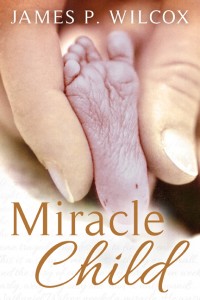
Miracle Child, by James P Wilcox

Miracle Child, by James P Wilcox


I’m thrilled to have author James P. Wilcox join us to discuss his new release, Miracle Child, a true story of miracles, both big and small, and one little boy born sixteen weeks early. Nathaniel Wilcox needed a miracle. He wasn’t expected to make it through the night. His story is a five-month journey to survive. He touched the hearts of everyone who cared for him, and one family managed to overcome tragedy and despair to find a renewed faith in each other and in God. Join me now as I discuss this moving story with James.

Silverberry: The night your wife’s water broke, you had to rush her to the hospital. Was there any warning that might happen? Did you know beforehand that Nathaniel might be premature?

James Wilcox: We had absolutely no warning at all. Mary had been to the obstetrician only a couple of days before this happened, and everything was fine. Nathaniel was our second child, and our first child went full-term with no complications. This was a total and complete shock and surprise for us. We had no warning, no way to prepare, and we operated purely on adrenaline

Silverberry: What were those first three days like?

James Wilcox: Those first three days were the longest and loneliest days of my life. I really didn’t know what was going on, what to expect, or what to do. My wife was on so many medications that she really couldn’t talk and she certainly couldn’t carry on a conversation. Most of the time, I just sat in her hospital room with my overactive imagination dreaming up all the possible “worst-case” scenarios imaginable. At times though, it was extremely hectic as I had to let family, friends, and our respective places of employment know what had happened. It was physically, mentally, and emotionally exhausting.

Silverberry: Nathaniel weighed only 1.8 oz when he was born. He wasn’t expected to make it through the night. What was going through your mind?

James Wilcox: First, I was in complete shock that a child could be so very, very, small, so tiny and fragile. I had never seen a micro-preemie before and had no idea that babies could be born so small. The nurses kept telling me that he was huge for how early he was born (he was twelve-and-three-quarters inches long) and I could only look at them like they were completely crazy. After the initial shock, the only thing I could worry about was getting Nathaniel baptized. I didn’t expect him to make it through the night, so I wanted to make sure that he was baptized before he died. Honestly, I simply couldn’t imagine he could survive as small as he was.

Silverberry: What complications did he face over the next months?

James Wilcox: Nathaniel faced a number of complications over the next five months. The most immediate was his immature lungs. He was put on a ventilator almost immediately after being born, and my wife and I gauged his condition by his ventilator settings. Nathaniel had a total of twelve surgeries while in the neonatal intensive care unit, including abdominal, heart, and eye surgery.

Silverberry: Nathaniel’s struggle to survive, juggling work, visiting him in the hospital, spending time with your oldest child—how did all that affect you?

James Wilcox: I was physically, mentally, and emotional exhausted the entire time. It was so very difficult to balance the needs of my oldest son Ian, Nathaniel’s needs, Mary’s needs, and my own needs with work and everyday life. I did learn a valuable lesson though: it is all right to ask for help when you need it. It is humbling at first to ask for help, it is so much easier to give, then it is to receive, but once I was able to swallow my pride, I found that countless people; family, friends, co-workers, member of our church community, were there to help and support Mary and me through this difficult time

Silverberry: How old is Nathaniel now and what challenges does he face?

James Wilcox: Nathaniel turned ten back in November and one of the miracles of this story is that he has few long-term effects from his extreme prematurity. He does suffer from a pretty significant case of ADHD, which can be traced to his prematurity, and he’s visually-impaired, but other than that, he is just a typical ten-year-old boy.

Silverberry: What was it like to write the book? I imagine it might be a kind of release. On the other hand, it could bring up difficult memories.

James Wilcox: In many ways this was the easiest book I have written to date. As a fiction writer, I have to create characters, develop the story line, manage transitions, and manage the plot. In Miracle Child, I didn’t have to worry about any of that because the story was already “written,” so to speak. At the same time, this is the most difficult thing I have ever done because Miracle Child is such a personal story and it means more to me than any book I have ever written. There were times when I was working on Miracle Child and couldn’t see the computer screen because of the tears in my eyes. It did serve as a release in some ways because I felt a strong call to share this story with others.

Silverberry: Please share some of the joys Nathaniel has brought to your lives?

James Wilcox: Like any parent, my wife and I have taken great joy in all the milestones in his life: the first time he rolled over, sat up, walked, and talked. Really, though, I think the greatest joy I have gotten from this journey is the recognition that I have been given a gift. Nathaniel is a miracle in so many ways and somehow, for some reason, God saw fit to bless my wife and me with this miracle. Since Nathaniel is visually impaired, I find myself constantly trying to figure out how and what he sees. I try to see what he sees, I try to see “the world” through his eyes. I believe that this has made me a more empathetic person because I find myself trying to see “the world” through other peoples’ eyes as well. This empathy, this recognition, and understanding of individual challenges has made me a better teacher, a better husband, a better father, and just a better human. This is the greatest gift I could have been given.

Silverberry: What do you hope the book will provide parents of a premature baby?

James Wilcox: Miracle Child is my son’s story, but it isn’t just the story of a premature child. It is a story of grief, despair, and fear, but it is also the story of love, hope, and faith. What I hope that readers will take away from Miracle Child is that there is hope in every situation. No matter how desperate the situation, no matter how dark the hour, no matter how overwhelming the experience may be; there is always hope. We aren’t always granted the outcome we ask for, but if you are willing to love and can hold on to your faith, your faith in God, in your family, in your doctors, miracles will happen. I firmly believe that God never gives a person more than they can handle. He never asks for more than we are capable of giving, even when we don’t think we have the strength to go on. It is this faith, and the love of my wife, my family, and my friends, of everyone who was involved in this story that allowed me to get through this journey and to recognize this gift for what it truly is: a miracle.

Silverberry: Thank you, James, for sharing your inspiring and moving experience, and for writing Miracle Child. To find more about James, his work, and to purchase his books, follow these links:

James Wilcox’s Website


James Wilcox on Facebook


James Wilcox on Twitter: @m16agenda


Miracle Child available on Amazon:


Kindle Edition: Amazon

Print Edition: Amazon


Miracle Child available at Barnes and Noble:


Nook Edition


Author Biography:

James P. Wilcox is the author of Miracle Child, two novels – Sex, Lies, and the Classroom and The M-16 Agenda – and Musings of a Particular Bear: A Poetry Collection. James, a former newspaper photographer and writer, is currently a high school teacher in the Kansas City area, where he lives with his wife and three children.

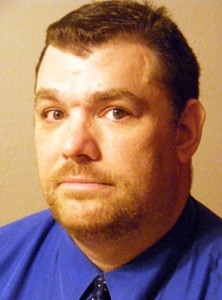
James P Wilcox, Author of "Miracle Child"

James P Wilcox, Author of “Miracle Child”


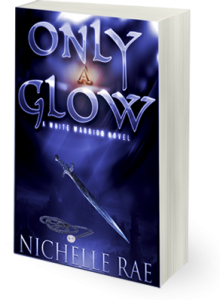
Only a Glow: Nichelle Rae Author Interview

Only a Glow, By Nichelle Rae

Only a Glow, By Nichelle Rae


I’m thrilled to have fantasy author, Nichelle Rae, joining us today. Nichelle is the author of Only a Glow, the first volume of The White Warrior series. One look at the book’s trailer (on her website), and you’ll want to grab a copy!

Silverberry: What do you think makes fantasy an enduring genre?


Nichelle Rae: I think it endures for a few reasons. First, the idea of magic is based on nothing in reality, and people that read books often want to escape reality, and there is no more complete way to do that then to dive into a world of magic which is not real. Second, I also think the characteristics of fantasy characters are so lacking in the world these days that people, again, want to dive into a world with an abundance of nobility, honor, bravery, loyal friendships and such deep love that friends fight for and die for friends. Finally fantasy books are often (if not always) adventurous and people can participate in the adventure of the characters from the safety of their own home.


Silverberry: What inspired you to write Only a Glow?


Nichelle Rae: I was obsessed with the Lord of the Rings movies when they first came out (I saw Fellowship of the Ring 23 times in theaters just to give you an idea of the insanity). But for me, there weren’t enough tough females in the books (or movies) and I’m a sucker for a tough female heroine. So, being a bored 19 year old, I started writing my own version of Lord of the Rings with an added main character named Azrel. As the story progressed Azrel starting to take on a life of her own and her story started to lead away from the Lord of the Rings plot. When I realized this, I just shrugged and decided to follow her. Lo and behold! Two years later The White Warrior series was born.


Silverberry: What’s the novel about, and who would enjoy it?


Nichelle Rae: Only A Glow is the first book in my epic new fantasy series, The White Warrior. Azrel, her brother Rabryn, and her best friend Ortheldo journey across their land to try to save the world from another age of the Shadow Gods rule.

Along the way they realize something is wrong with Azrel’s White Warrior magic that causes Azrel to uncharacteristically lose her temper, in sometimes violent ways, against her brother and best friend. Rabryn and Ortheldo have to try to find out what’s wrong with Azrel’s magic because her magic is the only power that will cause the Shadow Gods to stumble and fail in taking over the world again.

I think any and every fantasy genre fan would enjoy my series. I read a lot of fantasy books, and you can’t help but take away something from reading as much as I do, LOL. The White Warrior series has every element of a great fantasy story and I even managed to add a unique twist in the plot concerning what’s wrong with Azrel’s magic.


Silverberry: What does your heroine, Azrel, yearn for?


Nichelle Rae: To bring honor back to her scorned father’s name as The White Warrior. That is the only thing that drives her on through her hardships and peril of her adventure. She loved her father very much and he was an incredibly great White Warrior who single handedly brought the world back from an age of Shadow. The world hating him the way it does now, burns Azrel’s blood more than anything else and she wants to fix it. But she wrestles with the doubt and uncertainty in her abilities as The White Warrior and fears that she actually will not bring honor back to her father’s name.


Silverberry: What was your approach to crafting the plot, and how far into the series have you worked it out?


Nichelle Rae: I am a “fly by the seat of your pants” author. I just write. I don’t outline or plan anything. I have no idea how, or where, a book of mine is going to end. The White Warrior series is completely done, only hand written in 27, 5-subject notebooks that I have to type out. When I wrote the series I had no idea how it was going to end, so some of the plot in the middle that won’t make sense with the ending is going to have to change or be taken out. Because my series is so long I won’t know what needs to change or be taken out until I come across it as I type the books out.


Silverberry: What was your approach to building Azrel’s world?


Nichelle Rae: LOL See previous question. I didn’t plan or approach anything in any organized form. I just sat down and wrote.


Silverberry: What have been the biggest influences on your writing?


Nichelle Rae: Probably a lot of the fantasy authors I have read, in one way or another, have shaped my writing. But it was The Lord of the Rings movies that influenced the actual series.


Silverberry: What advice do you have for would-be writers?


Nichelle Rae: If you’re self publishing, make friends and connections with bloggers right off the bat. Bloggers are the marketing tool for self published authors. Without them promotion is near impossible.


Silverberry: What’s ahead for you?


Nichelle Rae: I’m currently typing up book #3 in The White Warrior series titled “Steady Burn.” I also have 4 separate trilogies waiting on the back burner that I’ve begun. I’m just waiting to get all The White Warrior series books out.


Silverberry: Thanks for stopping by, Nichelle! Readers can follow you and purchase your books at the following the links!


SOCIAL MEDIA


Website

Blog

Facebook

Twitter: @Nichelle_Writes

Goodreads: Nichelle Rae


PURCHASE ONLY A GLOW!


Amazon


The Normal in Paranormal

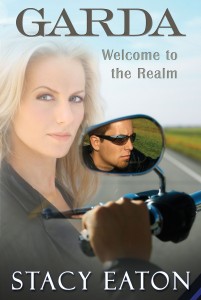
Garda, Welcome to the Realm, by Stacy Eaton

Garda, Welcome to the Realm, by Stacy Eaton

Guest Post by international bestselling author, Stacy Eaton:

Silverberry, thank you so much for allowing me to visit with you and your readers today! I am always honored to be a guest and share my thoughts, feelings and my writing!

I write Paranormal books, and you recently asked me how I use normal life to create a believable world, so let’s talk about that.

To understand a bit about me and my mind, your readers should know that I am a police officer by career and have been so for over twelve years. My knowledge of crime and forensics play a vital part in my writing. While I may use incidents that I have witnessed or been part of, I change things around so they are always different.

My first two books deal with vampires helping the police to solve mysteries. My most recent book, Garda – Welcome to the Realm was released on February 10th, and it brings Guardian Angels to the law enforcement world.

One of my lead characters is Officer Corey Hamilton. She is a very strong woman who cares about helping people, on and off the job. The second main character is Officer Mitchell O’Reilly. Corey and Mitch get involved in a relationship that could change many lives, and not all for the better. Brock is the third main character and he is a Garda, or a guardian angel as you would call them.

Between these three characters, I use my knowledge of law enforcement to bring you behind the scene aspects of what a police officer does in their job. Throw in the paranormal aspects of the angels, the land of “the Realm” where the angels reside and train, and some serious twists and turns and you have a book that could very easily make you wonder if guardian angels could really exist.

I love writing in this genre because it allows me to take a step back from my stressful daily job and add in the elements that make for a more enthralling story!

Thank you again for allowing me to stop by and share with your readers.

Synopsis from Garda – Welcome to the Realm:

He is my destiny.”

There is a place that lies between heaven and Earth, it is called The Realm. Within this place, the Guards of Peace, known as Garda Síochána, learn to guide and protect the ones that live below until they are called home.

Officer Corey Hamilton is dedicated to being the best that she can be, in uniform and out. Her loving nature, compassionate thoughts, and warrior strength make her the perfect candidate to join the Garda Síochána and spend her eternity protecting and guiding others.

Just before Corey dies in a line-of-duty accident, she meets Officer Mitchell O’Reilly. Her feelings for him may change her destiny, but not for the better, as she falls in love with this married man. Brock, Corey’s personal Garda, will bring her home to The Realm and attempt to train her for her future, even while she still fights for her past.

Will Brock be able to direct Corey down the right path, or will she cross the line and fall from grace?


Join Corey, Mitchell, and Brock for an emotional and heart-pounding adventure that is sure to make you wonder if angels are really guiding us in our everyday lives.

Follow Stacy Eaton!

Website

Blog

Goodreads

Facebook

Twitter: @StacySEaton

YouTube Video Book Trailer

Purchase Garda – Welcome to the Realm:

AMAZON KINDLE
NOOK
About Stacy Eaton:

Stacy Eaton is a police officer by profession. Currently, she is working as the department investigator and enjoys digging into cases and putting the pieces of the puzzles together.

Stacy resides in southeastern Pennsylvania and is the wife to a police officer and the mother of two. She is very proud of her son who is currently serving in the United States Navy and equally proud of her nine year old daughter who works hard in her Tae Kwon Do studies.

When Stacy is not working her demanding job, or spending time with her family, she works on her business and volunteers with the World Literary Café. When there is time, she writes.

Stacy is currently working on book 3 of the International Best Seller “My Blood Runs Blue” series (release anticipated late 2013). She is also working on a second Domestic Violence Novel, You’re Not Alone. She also has plans to add a second book to her newest series, Garda, along with publishing a contemporary romance later this year.

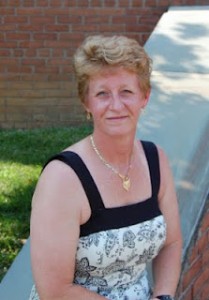
Stacy Eaton, Author of Garda – Welcome to the Realm

Stacy Eaton, Author of Garda – Welcome to the Realm


Liebster Blog Award!

“Liebster” is a German word for favorite, and the Liebster Blog Award is given to bloggers deserving wider recognition, and who have less than 200 followers. The purpose of the Liebster Blog Award is to spread the word about these folks and their fine work.


Thank you, Tricia Drammeh, for nominating me! I encourage all my readers to check out her wonderful blog: Authors to Watch.


Here are the rules for participation on the Liebster Blog Award:

  1. Tell 11 things about yourself.
  2. Answer 11 questions from the blogger who nominated you.
  3. Nominate 11 bloggers who have less than 200 followers.
  4. Post 11 questions for those who will be nominated by you.
  5. Get in contact with those 11 bloggers in order to inform them that you nominated them.

Here are 11 things about myself:

  1. In addition to being a writer, I’m a psychologist.
  2. I love the show Iron Chef America.
  3. I have a cat (I swear this is true) who struts like a Lipizzaner stallion.
  4. I wrote a large portion of Wyndano’s Cloak commuting on a train.
  5. I wish I didn’t need sleep!
  6. While in college, I cooked in a seafood restaurant.
  7. I could never live in a big city; I’m a country boy at heart.
  8. Walking is my favorite exercise, and I get my best ideas while I walk.
  9. I’m into Shabby Chic interior design, which scores big points with my wife!
  10. I have a weakness for Thai food.
  11. Ditto for chocolate!

Here are the 11 QUESTIONS, given to me by Tricia, which I will pass on to those 11 bloggers nominated at the bottom of this post:


1. Why did you start blogging?


Blogging is a great way to update my followers about what I’m doing. I also love being able to interview other authors, introduce them to others.


2. What is your favorite genre to read?


Triller and suspense.
3. What fictional character do you most wish were real?


Gandalf.
4. Describe your dream office for writing.


The one I have. It has a fabulous view of sand dunes, and I’ve scattered figurines and other collectibles on shelves to stimulate my imagination (sort of like what you see in Ray Bradberry’s office, though not so cluttered).
5. Name one thing you couldn’t live without.


Art in any form, but mostly music and stories.
6. If you could only keep one book, what would it be?


Lord of the Rings. I take it a trilogy doesn’t break the rules!
7. If you could magically transport yourself into any book, which one would you choose,
and what character would you be?


I’ve been tempted to inject my Silverberry persona into one of my stories. Otherwise, the stuff I read is too scary to even think about injecting me into those worlds. I’m very happy to read about them by the fire, thank you.


8. Do you have any phobias?


Nope.
9. What is your biggest pet peeve?


Getting trapped in the endless loop of am automated phone system, with no way to reach a live person, then getting disconnected, and having to start all over again.
10. Describe yourself in five words.


Loyal, caring, compassionate, creative, loving.


11. Who is your favorite well-known author and your favorite rising star author?


Oh, this is so hard. I go in sprees. I was on a Dickens tear for a number of years. And also Dean Koontz. I’ve been listening to a lot of audio books during my commute. My attention span requires the author to have a strong, compelling voice. Crank, by Ellen Hopkins, really grabbed me. Also, Roll of Thunder, Hear My Cry, by Mildred D. Taylor. But those wouldn’t exactly be rising stars.


People wanting to follow me should sign up for my Newsletter, and follow me on Facebook and Twitter. Links to your right!


Okay, I can’t swear that these folks don’t boast more than 200 followers, but they are all awesome! So pull up a chair and get to know them! My nominees for the Liebster Blog Award are (drum roll):


Shevi Arnold

Lloyd Russell

Elle Thornton

Emerald Barnes

Virginia Lee

Micheal Rivers

Yvonne Anderson

Andrea Buginsky

Kathie Shoop

Beth Elisa Harris

E. W. Greenlee


Parenting Tips For New Experiences

Luca Lashes, Children's eBooks and Apps

Luca Lashes, Children’s eBooks and Apps

Parenting Tips For New Experiences

Guest Post, by Nicole and Damir Fonovich, co-creators of Luca Lashes children’s eBooks and apps

Every day parents are confronted with a new experience that their child will have. All parents struggle with this issue, and ask themselves so many questions that confusion typically reigns supreme: “Is my child ready for this experience?” “Will my child be afraid?” “What should I do if he/she is afraid?” “What should I do to prepare them?” “Are they ready to try new things on their own?”

These are just a small sample of questions parents deal with on a regular basis. As the experiences become markedly different and complex, the confusion becomes even more the standard. Obviously the first thing to let all parents know is that they are not doing and have not done anything wrong. If you are asking these questions (and more), you are already well on your way to being a good parent, because a bad parent would not care so much to be that introspective. This reassurance aside, there are some simple rules that could be followed with helping your kids through new experiences that can give you some sense of peace and self-confidence:

1. The earlier the better

With most new experiences, familiarity and repetition breed confidence. So the simple fact is that the younger you expose your child to new experiences, the easier it will be. If the first dentist appointment your child goes on is when they are 1, then it stands to reason that annual dentist appointments should get easier and easier each year. If you want your child to become a good swimmer and not be afraid of water, get them into a pool as early as your pediatrician will allow.

2. Model the behavior

This is of vital importance. If your child sees that you are hesitant and afraid of new experiences, they will most likely pick up on that anxiety and display it themselves. Easy examples here include going to the dentist. We are currently experiencing an epidemic of tooth decay in preschoolers that was reported in every major news outlet. It would be really interesting to see the statistics on how many of these cases could have been prevented by parents who are not afraid to go the dentist themselves. Beyond the obvious advantages of showing your children your own willingness to try new things and jump right into new experiences, there are valuable lessons in self-confidence that a child can learn from modeling these behaviors.

3. Talk through it first

Sometimes it pays to over-prepare as a parent. In the case of having to experience something new, if you have the ability to talk a child through a new experience and have them understand you, you should do it. Let’s look at going to get that first shot at the doctor’s office (the one a child is old enough to remember)! Ask your child if they know why they have to go to the doctor. Walk them through what the office will look like, what the nurse will do, and what the doctor will do. Describe the experience with as much detail as you can, and give your child an open ear so that you answer any questions they are capable of asking. It might also help to go the doctor’s office a day early and get your child ready for what the experience might look like the next day. The most important part of this method is being ready and willing to answer as many questions as you get. Children can get very creative with their worries and fears, and being confident and reassuring in your responses will make the whole experience more worthwhile.

4. Talk about it after

So you have gotten through that first haircut, or just come home from the first plane ride. It seemed like everything went well and your child got through the experience with very little anxiety and seems comfortable. Maybe you had the opposite happen and your child is now overanxious. The most important thing now is to talk about what happened. Was the experience everything your child thought it would be? Did they understand everything that happened? Do they have any questions? Did they want you to be more active or less active in their experience? Whatever the result of the experience, this conversation is the most important teaching moment for different experiences later.

No one has the magic elixir for having your children experience the world with discovery and wonder through every moment, but the hope here is that this primer can give parents a starting point. Happy parenting!

Together, Nicole and Damir Fonovich have 17 years of experience in education, in both teaching and administration. They are the co-creators of Luca Lashes, a line of multilingual eBooks and apps designed to help kids (0-4) turn “fear of firsts” into fun. They currently live in the Chicago area. Learn more at www.lucalashes.com.

Nicole and Damir recruited a team of editors, illustrators, music composers, translators and narrators to create an educational and fun answer to every parent’s struggle. The result: a whimsical, multi-lingual (English, French, Italian, Spanish, and Chinese) line of children’s eBooks and apps based on a boy with magic eyelashes which give him special brave powers in all his “scary” firsts.

Nine books in the series release throughout 2012, and follow Luca as he (and his parents) conquers fearful firsts, from brushing his teeth to visiting mommy in the hospital. Parent suggestions at the back of each book and on YouTube highlight key teaching concepts and offers questions parents can use to prompt learning opportunities.

New technology also allows for interacaction with the words and illustrations. For example, the Luca Lashes: The Brown-Eyed Boy with the Magic Eyelashes app allows readers to listen to the school bus as it honks and drives away, hear the dog bark, and turn Luca’s bedroom lights on and off. In the Luca Lashes Learns to Brush His Teeth app, kids see toothpaste being squeezed onto the toothbrush, hear the sound of toothbrush bristles, and hear frogs “ribbit” and ducks “quack” in the background.

AVAILABLE AT: Luca Lashes: The Brown Eyed Boy with the Magic Eyelashes app is free on iTunes, and the other apps can be downloaded for $1.99 at all major marketplaces. Accompanying eBooks can be purchased for $2.99 everywhere eBooks are sold, and also at Lucalashes.com. View the Electronic Press Kit here.

Luca Lashes: The Brown-Eyed Boy with the Magic Eyelashes (free app on iTunes)

Luca Lashes Learns to Brush His Teeth (now available)

Luca Lashes and His First Trip to the Dentist (now available)

Luca Lashes and His First Haircut (now available)

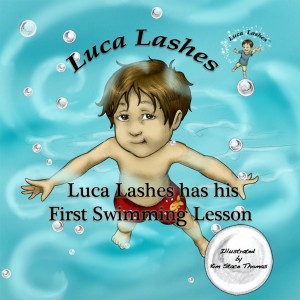
Luca Lashes has his First Swimming Lesson (now available)

Luca Lashes Visits the Doctor (Nov. 2012)

Luca Lashes and the Trip to the Nursing Home (Dec. 2012)

Luca Lashes Visits Mommy in the Hospital (Jan. 2013)

Luca Lashes and His First Airplane Ride (Feb. 2013)


Story in the Stars: Interview of Yvonne Anderson, SciFi Author

The Story in the Stars, By Yvonne Anderson

The Story in the Stars, By Yvonne Anderson

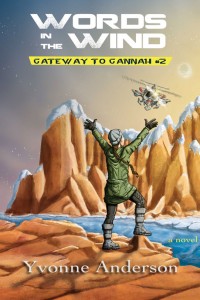
I’m thrilled to have science fiction author, Yvonne Anderson, join us today for an interview. Her novel, The Story in the Stars, was an ACFW (American Christian Fiction Writers) 2012 Carol Award finalist in the Speculative Fiction category. Words in the Wind, released August 2012,continues the saga. Book #3, Ransom in the Rock, is in the publishing pipeline, and Yvonne is currently drafting the fourth and last in the series.

Yvonne is the contest administrator for the Launch Pad Contest: Launching You Out of the Slush Pile. This is a contest for unpublished writers sponsored by Novel Rocket, named four times to Writer’s Digest list of the 101 Best Websites for Writers. Please join me in welcoming this talented writer!

Silverberry:

Initially, you didn’t care for Science Fiction. What led you to write in this genre?

Yvonne Anderson:

I never took it into my head to write anything until I was well into my forties. Then, I plunged in with great seriousness but no idea of what I was doing. My first few manuscripts were all over the place as far as genre, because I wasn’t sure where I belonged. Everything came to a head in late 2005 as I stood in a bookstore looking for titles similar to the one I was currently pitching. You know how proposals are supposed to include comparative titles? Well, I drew a complete blank when I came to that section, so I scoured the shelves—yes, a physical bookstore, not Amazon—looking for something I could compare my story to. Not only did I find nothing satisfactory, but I didn’t find a single book I’d want to spend my money on. With this came the realization that I couldn’t, in good conscience, expect people to spend their money on the drivel I wrote, either. I felt like flinging books off the shelves and throwing them through the front window. Since this didn’t seem a wise move, I chose instead to leave the store. And to swear off fiction. I was done with it. Forever.

While diligently avoiding novels, I ran across an interesting little nonfiction book called The Gospel in the Stars by Joseph Seiss, which proposed the theory that when God created the heavens and the earth, He positioned the stars in constellations that pictured the gospel message for early man to “read.” It was a fascinating concept, but I had a hard time with the book. It was originally written in the 1800s and the language was stiff and archaic. Moreover, it discussed a subject (the stars) that I knew nothing about. But still, the idea intrigued me, so I decided to write a story (oops – so much for that no-fiction resolution) in which the characters discovered this story in the stars. I could have given it any sort of setting—the characters could have been cavemen, or whatever. But I guess because I’d been doing so much reading about stars, I gave the story an outer-space setting. I hadn’t gone very far into it before I was having more writing fun than ever before. Despite the fact that I’d never liked science fiction and had always turned up my snobby little nose at Christian fiction, I found my niche writing Christian sci-fi. God has a great sense of humor.

Silverberry:

In five words or less, what’s Story in the Stars about?

Yvonne Anderson:

Redemption.

Silverberry:

What do your main characters, Dassa and Dr. Pik, yearn for?

Yvonne Anderson:

Dassa has lost her home, her family, everything she’d ever known. What she yearns for most is for at least some of that to be restored. Pik is an outsider at home and abroad; as the only child of the galaxy’s only union between a woman from Karkar and a man from Earth, he yearns for acceptance and a place where he truly belongs. Each is, therefore, the only one of her or his kind in existence. This gives them a point of commonality and offers potential for them to find in one another what they most desire. But since their ancestors were enemies and the ancient hatred runs deep on both sides, a relationship between them is out of the question. Don’t even think about it. Ain’t gonna happen.

Kinda like I was never going to write fiction again.

Silverberry:

What was your approach to building the world of your novel?

Yvonne Anderson:

To create a place Earth-like where I could feel at home, but different enough to be alien and exotic, I put a weird spin on common terrestrial geographical features. For instance, I created a vast forest, perhaps similar to that which covered the eastern US at one time, but with some differences: such as, the deciduous trees have different colored foliage (shades of blue, purple, red, and yellow, with the only green being firs), and they keep their leaves all winter. I drew a map of this world, with major geological features and their names. Speaking of names, since Earth history began in a garden, I named my creation Gannah (Hebrew for “garden”). With that as a starting point, all sorts of interesting details revealed themselves once I began writing the story.

Silverberry:

In what ways have your own experiences found their way into your novel?

Yvonne Anderson:

I don’t know that it’s possible for any of us as authors to completely divorce ourselves from our stories, because we write about what’s important to us and portray reality as we believe it to be—or sometimes, as we’d like it to be. In the case of my Gannah series, none of the situations reflect my own experiences, but the protagonist’s worldview reflects my beliefs.

Silverberry:

Gateway to Gannah is a series. How did you work out the plot?

Yvonne Anderson:

I’m a seat-of-the-pants plotter. When I began The Story in the Stars, the first book in the series—which, incidentally, started out to be a short story but quickly got out of hand—I had a beginning, a middle, and an end in mind, with no concept of anything else that would have to happen in order to get my protagonist from Point A to Point B. Once I started writing it, I realized there was no way I could come to the desired conclusion in just one book, so I had to choose another place to end. Though it was never in my mind to write a series (this started out to be a short story, remember), by the time I finished Stars, I not only had that still-in-the-future ending I wanted to use, but also, I’d discovered some really fun things about the planet Gannah I hadn’t been able to include. So, while I was pitching Stars to agents and publishers, I started writing a second. I was near to wrapping that one up when Risen Books offered me a three-book contract for this series I’d never planned to write.

Silverberry:

Tell us about Risen Books, and how you landed a three-book contract with them.

Yvonne Anderson:

In December 2010, a writer friend told me she’d been offered a contract for her latest manuscript by a publisher I’d never heard of before, Risen Books. I checked out their website, saw they were taking submissions for science fiction, and sent them a proposal. Very soon thereafter, they asked for the complete manuscript. I saw that as an encouraging sign, but I wasn’t bouncing off the walls over it. I’d been asked for a complete before, but it had never gone any farther.

The fact was, I considered The Story in the Stars unpublishable. It has a strong Christian theme and lays out the gospel in clear, unmistakable terms, thus making it too “religious” for the secular market. But it contains enough mild profanity and worldly behavior on the part of the characters that I didn’t figure any traditional Christian publisher would touch it.

Though willing to make necessary editorial changes, I was determined to neither clean it up for the Christian market nor water down the message for the secular publishers. To begin with, the story in the stars is, as I explained earlier, the gospel story; and there’s such uncertainty and misconception about what that is, exactly, that it seemed important to spell it out; retaining an unambiguous explanation of the Christian gospel was non-negotiable. As far as cleaning it up? Well, that would just be ridiculous. I included nothing sensational, but I wanted to portray the life and language and attitude of a person who’s not a Christian as realistically as possible, given the fantastic setting and events.

Risen Books was a small Christian publisher, and a new one, but I figured once their acquisitions editor saw that scene in Chapter 2 where Dr. Pik views pornography on his computer, he’d give my manuscript the old heave-ho in short order. I nearly had a stroke, therefore, when he contacted me in mid-January 2011 to talk about contracting a series.

Silverberry:

You’re busy! Contest administrator for the Launch Pad Contest, bi-weekly contributor to the Speculative Faith blog, and you work with the blog The Borrowed Book.Tell us about these activities.

Yvonne Anderson:

I started working with Novel Rocket (fka Novel Journey) a number of years ago, initially doing monthly articles about various and sundry writing awards. That eventually evolved into organizing and administering a contest for unpublished novelists, now known as the Launch Pad Contest. We don’t guarantee the winner publication, but we do line them up with an agent, circumventing the slush pile. The first two years, we charged no entry fee. But when contestants started asking for detailed feedback on their entries, we instituted a fee so we could give the judges nominal remuneration for their efforts. Nowadays, each entrant receives two professional critiques, so win or lose, everyone gets his or her money’s worth.

The Speculative Faith blog is about Christian speculative fiction. Last summer, they asked me to do a guest post, which appeared in September 2012. Awhile later, they had an opening in their regular roster and asked if I’d be willing to contribute a post every two weeks. It sounded like a good way to get my name out there and let more readers know about my books, so I agreed. It’s interesting to come up with something on topic that hasn’t already been covered.

About the same time, a critique group buddy invited me to join the team at The Borrowed Book. I hesitated. For one thing, I worried it might be too much to add two new responsibilities at the same time. For another, the audience is primarily romance readers and writers. I neither write nor read romance, and for the most part, romance fans don’t read sci-fi, so I wasn’t sure it was a good fit. But eventually I agreed, figuring if they wanted me, it couldn’t hurt for publicity purposes. On that blog, though, my duties don’t involve writing anything, just lining up and posting author interviews. Although I’ve already started to get things organized, I won’t be posting until February.

Silverberry:

What’s ahead for you?

Yvonne Anderson:

I hope to finish the 4th and final book in the Gannah series early in 2013 and then move on to my next project. I have some ideas percolating, but until I wrap up Gannah, I won’t distract myself by visiting other worlds.

If the new year is anything like the old, it’s likely to have some surprises. For instance, this past fall we welcomed three new family members (two grandchildren and a daughter-in-law), and I spent a few weeks caring for my 86-year-old mother-in-law after she broke her arm. What made it interesting was the fact that all this happened at the same time. So what’s ahead for me? Only God knows. But with writing as well as life, I’m in it for the long haul, and I take each the same way: one step at a time, following Him wherever He leads.

Silverberry:

Thanks so much for joining us. People interested in purchasing The Story in the Stars, and learning more about you and the series, can follow the links below.

Purchase Links for Gateway to Gannah:

Book #1, The Story in the Stars (2012 ACFW Carol Award Finalist in Speculative Fiction)


Book #2, Words in the Wind

Follow Yvonne Anderson:


Fiction That Takes You Out of This World


www.YsWords.com


www.NovelRocket.com


www.SpeculativeFaith.com


www.TheBorrowedBook.blogspot.com

Follow Yvonne on Twitter: @YAnderson

Words in the Wind, by Yvonne Anderson

Words in the Wind, by Yvonne Anderson


The Claiming Words: Interview of Tricia Drammeh, YA Fantasy Author

The Claiming Words, By Tricia Drammeh

The Claiming Words, By Tricia Drammeh


I’m thrilled to have The Claiming Words author, Tricia Drammeh, join us today for an interview. Tricia’s work spans fantasy, paranormal romance, YA, and multicultural elements. Not to mention, she’s knocking the socks off reviewers. Please join me in welcoming this prolific and talented writer!

Silverberry: What inspired you to write The Claiming Words?


Tricia Drammeh: My love of reading led me to write the book. I actually began writing without a clear idea of where I was headed. The characters found me first, so I guess I’d have to say my characters inspired me to write their stories.


Silverberry: What’s the novel about, and who would enjoy it?


Tricia Drammeh:The Claiming Words is about the power of friendship and love. It follows two lead female characters, Alisa and Rachel, who have grown up together in a small, southern town, but have never been friends. When a new student moves to town, both girls are drawn to him—and drawn into danger. The book falls into the young adult category and I would recommend it to teenage girls thirteen and up, though some of my biggest fans are in their thirties and forties. I think the book would appeal to anyone who enjoys fantasy and romance.


Silverberry: What do your main characters yearn for?


Tricia Drammeh: They yearn for the same things most teenagers yearn for: friendship, acceptance, and love. Due to the extraordinary challenges they face, my main characters are also seeking safety and security, as well as answers to a mystery from the past.


Silverberry: What was your approach to crafting the plot for the sequels?


Tricia Drammeh: Each book tackles a particular challenge in the characters’ lives, but the overall plot for the series involves defeating an immortal enemy. Each book works toward the overall goal. As such, each book builds on the last, and while there are some unresolved issues at the end of each book, there is a satisfactory ending. I always cringe when an author ends a book with a cliffhanger, so I try not to do that to my readers.


Silverberry: What have been the biggest influences on your writing?


Tricia Drammeh: I think every book I’ve ever read has influenced me at least a little. I love JK Rowling, Terry Goodkind, Tolkien, Tad Williams, Anne Rice, and many, many other authors.


Silverberry: Why do you think YA Paranormal Romance is so hot right now?


Tricia Drammeh: Young adult romance has a widespread appeal because the storylines are complex enough to appeal to older adults, but the romantic scenes are appropriate for most age groups.


Silverberry: You’ve written six novels. Tell us about some of them.


Tricia Drammeh: Four of my complete novels are part of The Claiming Words series. I just completed a young adult paranormal novel about a girl who decides to perform a séance. When the séance goes horribly wrong, she figures out that being a Medium isn’t as glamorous as she thought it would be. The working title for the book is Diary of a Psychic Apprentice. I’m working on edits right now, so it will probably be quite a while before I can consider publication. I also have a stand-alone novel titled The Fifth Circle. It’s a book that explores mental illness, abuse, and addiction as the two main characters spiral down into a hell of their own making.


Silverberry: What advice do you have for would-be writers.


Tricia Drammeh: Write every chance you get, even if it’s just a sentence a day. Sentences turn into paragraphs. Paragraphs turn into chapters. Don’t get too hung up on perfection in your first draft. Just focus on finishing. Perfection is for edits and rewrites. Self-edit, find beta readers, or professional editors (if you can afford it)—just make sure that manuscript gets several passes by several sets of eyes before you submit to agents or publishers.


Silverberry: What’s ahead for you?


Tricia Drammeh:Demon Fire, the second book in The Claiming Words series, is scheduled for release Summer 2013. I’m working on completing the first draft of the final book in the series and also working on a couple unrelated projects.


Thanks for having me on your wonderful blog, Silverberry. I really appreciate it.


Silverberry: Thank you, Tricia! People interested in purchasing the Claiming Words, and learning more about you and the series, can follow the links below.


The Claiming Words Website Book’s Site


Tricia Drammeh Website


Tricia Drammeh Blog


Facebook


Twitter: @triciadrammeh


Purchase The Claiming Words on Amazon


The Claiming Words on Goodreads